A blog and podcast dedicated to rediscovering the lost pop, bubblegum and psychedelic classics of the 60s and early 70s, specializing in mono editions and out of print material. Curated and written by Portland-based music critic Casey Hardmeyer who writes for renown pop culture criticism website PopMatters. Follow the twitter account: CASEY HARDMEYER
The Way Podcast
Showing posts with label Baroque Pop. Show all posts
Wednesday, April 11, 2012
Burt Bacharach: Reach Out (1967) Original A&M Records Vinyl Transfer
Burt Bacharach's first album for A&M was Reach Out released in 1967, it mostly contains jazzy, orchestral instrumental arrangements of songs that he had written prior to releasing this record for other artists or for film soundtracks and plays. Don't let the Easy Listening tag fool you, this album is full of sophisticated and exquisite moments, lots of time changes, different movements within songs and gorgeously clear production. The soulful opening number "Reach Out For Me" is an immediate highlight, a blast of orchestral pop amid the serene and jazzy chord changes, with a fantastic instrumental blend including clarinet, piano, strings, trumpets, harpsichord, booming drums and the sultry "Bacharach Singers" (who sound like a more adult version of the Ronnettes). The record's best moments are in a similar vein, "Bond Street" turns from a bouncy jazz tune to a string laden, symphonic jewel in a matter of minutes. The arrangement of Bacharach's most famous song "What The World Needs Now Is Love" is absolutely brilliant. The unmistakable piano chords ring out loud and clear among Bacharach's orchestral and horn arrangements as the song suddenly takes a turn in to a be-bop styled jazz number mid-way through, only to return to the crashing and thunderous chorus with a Spector-esque touch.
This record is very different from the other material I've posted here. It's probably the music farthest removed from rock 'n' roll I've shared on the blog, and it's probably the most "adult oriented" music as well, as this music was not intended for the teen audience, or even the young adult audience. Some may find it bland, but it's anything but, Bacharach's arrangements are truly remarkable and always interesting. This copy is ripped from an original A&M Records vinyl pressing @ 320vbr using EAC's .WAV editor and LAME 3.97. No EQing, no pop removal, just a flat transfer. Enjoy: http://www.mediafire.com/?3qodb2f8d154bai
-Casey
Monday, March 5, 2012
Randy Newman: Randy Newman (Creates Something New Under the Sun) (1968)
I had an entirely different entry planned for my next post on the blog, I had my vinyl rip ready and everything. But then something happened, I heard Nilsson Sings Newman. I had heard about this album, it has a bit of a quiet mysticism about it, even if some of the reviews had more than just a hint of elitism about them. But still I was intrigued about the idea of the album itself. Nilsson was fresh off the success of having his first breakthrough hit, "Everybody's Talkin'", featured in the 1969 film Midnight Cowboy, the perfect time in his career to really showcase his chops as a songwriter and vocalist. But Nilsson didn't want to do it the traditional way (as he rarely did). Instead, he wanted to record an album of songs composed entirely by a relatively unknown singer/songwriter named Randy Newman. I'm sure RCA Records was just thrilled (yes, sarcasm is intended) with this choice as Newman's material, although quite good, was very much an "acquired taste". I only just in the last few weeks have acquired the taste, so to speak, and my earlier preconceptions about Newman's stuff were totally wrong. This guy is special. Newman's songs, while fairly traditional, rarely had distinct "pop" hooks or melodies, and his delicate chord progressions wandered almost aimlessly behind his trademark slurry, rambling voice. And upon hearing Nilsson's takes of Newman's early material, I just had to hear the Randy Newman debut album, which I had just recently become familiar with, to compare.
Newman's debut album, released in 1968, went virtually unheard, despite being produced by two prestigious LA music scene talents in Van Dyke Parks and Lenny Waronker. Newman had worked with the two on the Harper's Bizarre's first two records and I really think there was a mutual admiration that the three had for each other. Parks and Waronker had experienced legitimate commercial and critical success with their contributions to the Harpers and Beau Brummels records and Parks' own debut album, but Newman had remained out of the spotlight, mostly just writing songs for other acts to record. But obviously Parks and Waronker saw something in Newman, probably the same thing Harry Nilsson saw. Newman was a unique and unusual talent, drawing heavily on early Americana, Blues and Ragtime for lyrical and musical inspiration, much like Van Dyke Parks. But Newman's record was stripped of all the psychedelic trimmings and excesses of Song Cycle, leaving only Newman's voice, a piano, some guitars and a very prominent orchestra. And while Waronker's production is top notch, the songs are what really shine through.
The lead-off track, "Love Story (You and Me)" showcases all the album has to offer in one song, a delicate piano melody, sarcastic Newman lyrics, and fantastic orchestral flourishes supplied by Waronker. The next track "Bet No One Ever Hurt This Bad" is a breezy, front porch-y country folk tune with great guitar work from Ron Elliot, former Beau Brummel member. "Living Without You" is a tremendously beautiful song, with Newman's voice getting the closest it's ever gotten to "sweet sounding". With another lilting piano and harpsichord melody that builds up into a thunderous chorus where Newman declares in defeat "Baby, it's so hard... living without you." The next track "So Long Dad" is a typical and bittersweet Newman narrative, an account of a man coming back to his hometown to visit his dad, who he wonders "do you still work at the drugstore, is that true?...I miss my good ol' dad." The song, backed by a wandering piano and orchestral arrangement, is quintessentially odd and "Newman" in that it really has no traditional song structure and just seems to flow and morph as Newman shares his story.
"Linda" is another highlight, the song starts out with a quiet Newman intro, accompanied by an accordian and mandolin, then segues into a section with harpsichord melodies that are eerily similar to the piano and harpsichord motifs that Brian Wilson employed on the Smile album (remember, Van Dyke Parks did co-produce this record). Then the tune turns into a wild, carnival ride of sound, with tubas and trumpets blaring and bells ringing. You start to feel like you're at some turn of the century amusement park, a really fun song.
"Cowboy" finds Newman lamenting the disappearance of the ranch-hand, as his world becomes increasingly industrialized. "Cold grey buildings, where a hill should be". The song begins a desolate and drifting orchestral piece, punctuated with some very delicate harp notes when suddenly Newman bursts into an angry revelation "can't run, can't hide, too late to fight now" with the strings and horns picking up steam. This song really blew me away when I first heard it
"I Think It's Gonna Rain Today" finds Newman at his most somber and honest. It's a devastating ballad, equal parts sad and beautiful, with a peaceful piano intro. Strings join in on the second part of the verse and they add a certain intensity to Newman's world weary lyrics. Newman, who was only 26, sounds convincingly like a sad old man here, as he sings barely above a whisper. Seriously beautiful song.
This record has really been opening my eyes lately. Newman's music and storytelling really showcase what good lyrics can do to a song, they can really take you places. This is escapist music at it's finest. The album deserves so much more recognition for the masterwork that it is. It wasn't just a collection of Newman songs patched together to get his name out there, the record has a truly uniform sound, alot of it due to Waronker's brilliance as a producer. Waronker and Newman would work together on most of Newman's subsequent work, which may be more popular in the public consciousness, but this album really shines just as bright as Sail Away or 12 Songs. It's just such beautiful music.
-Casey
P.S. Didn't put up a download to this album as it is available on CD having been reissued in 1995 by Reprise. Order a copy on Amazon.

Saturday, February 18, 2012
Orpheus: S/T (1971)
The Boston based band Orpheus is another one of those strange lost bands from the 60s that still hasnt quite found a resurgence in interest from even fans of the sunshine and baroque pop genres. The group's sound, produced by Alan Lorber, had a distinct and heavy orchestral sheen to it, on almost every track, a trademark of the genre, although the band's songs were mainly rooted in folk music. Their biggest success came early in their career as they scored a hit in late '67 with the beautiful song "I Can't Find the Time to Tell You", written by the band's lead singer and frontman Bruce Arnold. Along with Arnold, the band featured Jack Mckennes on guitar, Eric "the Snake" Gulliksen on bass and Harry Sandler on drums (although mostly studio musicians would play on their first album). Signed to MGM records, who at the time were trying to create a music scene in Boston that would rival the then wildly popular psychedelic San Fransisco music scene, Lorber dubbed the scene the Bosstown Sound. MGM had signed acid rock acts like the Ultimate Spinach, Beacon Street Union and the psych-popsters Chamaeleon Church to appeal to fans of the new psychedelic sound, and although Orpheus was the main act for this new Bosstown Sound campaign, they were hands down the least psychedelic and most radio ready band that Lorber had to offer. But, they were probably the best out of those groups, due to Arnold and his writing partner Steve Martin (no relation to the actor/musician/whatever he thinks he is) consistently producing good original material for their albums. Their first two albums, (Orpheus S/T (1968) and Ascending) were fine examples of baroque pop as Alan Lorber's production is top notch, although, if youre not a fan of orchestral accompaniment those albums are probably not for you as strings and brass dominate the instrumental backing tracks. Their third album, Joyful, was a bit of a departure from the first two, a bit quieter and baring obvious folk and jazz influences, but it may have been their strongest yet. By 1969, Orpheus were struggling for a repeat of their early commercial success, although they had established considerable regional popularity in New England and were known as a solid live act (apparently they blew The Who off the stage when they opened for them in Boston). Orpheus broke up briefly in 1970 (I think), but Arnold and his collaborator Steve Martin still were playing together in a band called Two Foot Lamb Door. They had written some new material and got the OK from Alan Lorber to continue on using the Orpheus name. So they went back in to the studio to record album number 4, this time as basically a duo consisting of Arnold and Martin, backed up by Lorber's studio musicians.
The album that resulted was a very unusual album, and one that certainly was the furthest departure from their earlier sound. The material here is dark and brooding, as opposed to their earlier "lovestruck" themed material. Martin is even featured as lead vocalist on a few of the albums best tracks and his eerie vocal delivery contrasts starkly from Arnold's low tenor croon. The album kicks off with a fantastic song, "Big Green Pearl", a big, soaring Baroque/Folk number with a terrific hook, mystical lyrics and nice vocals and harmonies from Arnold. Lorber's orchestral touch is most evident on this track. I believe this was the single they attempted to make a comeback with, but it didnt make much chart impact. The next track covers very different territory, "Monkey Demon", is a Steve Martin song and vocal. A slow burning folk number, with some jazzy electric piano and nice brushwork on the drums. Martin's vocals here are really cool and moody. The next track, "It Gets Worse Everytime" finds Orpheus at their most stripped down, just acoustic guitar, bass, drum and another nice vocal from Martin. The songs got a bit of a Stones vibe, probably the closest Orpheus ever got to recording a blues-rock tune, and its not too bad. But the follow up track, Arnold's "I Wanna Be Your Lover" is a gorgeous folk-pop tune. No rhythm section in this one, just a couple acoustic guitar tracks, some surprisingly tasteful steel drums and marimbas, and a wonderful vocal from Arnold, one of his best ever. The mid point of the album may be the weakest section as "Nunnery" and "Sweet Life" are kind of out place bare bones rock tunes that dont particularly suit Lorber's production and Martin and Arnold's vocals very well. But the album finished with some very fine tracks, "Tomorrow Man" is a haunting psych-folk song with another stripped down arrangement, letting Arnold's precise and deliberate vocal take center stage. "Rainbow Peddler" is another album highlight. Starts off with a quiet and creepy Martin folk intro then builds in to a big stirring chorus where the song turns in to a full bore psychedelic roots rocker, with a prominent (and awesome) harmonica track. Very cool song. Next up is "I'll Be There", another throwback to the Orpheus sound of old and a very solid one at that. A heavenly melody and vocal from Arnold is accompanied by some nice orchestra work from Lorber. The album finishes with a stripped down reprise of "Big Green Pearl", with Steve Martin on vocals, slowing the tempo down with just an acoustic guitar and touch of piano. Very appropriate close to a pretty odd, but very interesting album. This album takes a few listens to really sink in, as it its cold exterior can be a little off putting the first time through. But give it time, and you'll find some very rewarding material on here.
Because of the extremely limited availability of Orpheus's material on CD, I am posting my own personal vinyl rip here, sourced from an original copy. This is only intended to be a preview for the listener so he or she can buy the record themselves.
https://rapidshare.com/files/2855702197/Orpheus_1971.rar
WARNING: the song "Sweet Life" didn't transfer so well during the rip so that one skips like crazy. The other tracks sound good though, better than the impossible to find re-issue CDs.
-Casey (twitter.com/thewaykpsu)
Wednesday, February 15, 2012
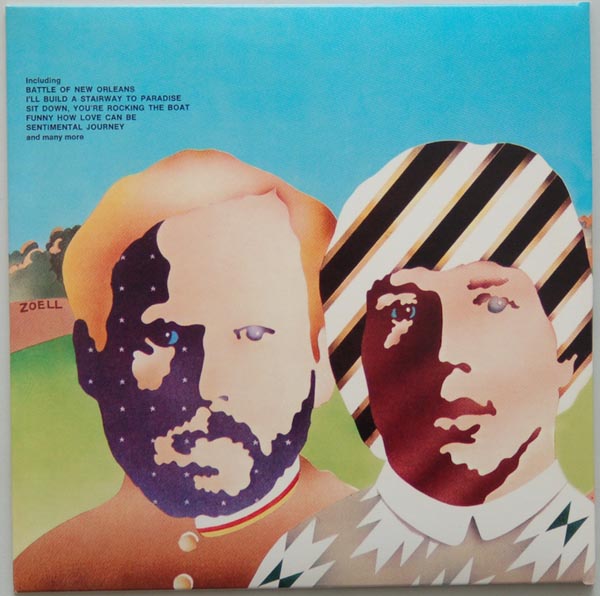
Harpers Bizarre: The Secret Life of Harper's Bizarre (1968)
The Harpers Bizarre may be of the most misunderstood and wrongfully ignored bands from the 60s. Well...they may not have been a band in the typical sense of the word to begin with. Autumn Records signed the Tikis in 66 or 67, who were then composed of Ted Templeman, Dick Scoppetone, Dick Yount, John Petersen and Eddie James. Apparently, Randy Newman was said to have been a member of the Tikis for a brief while. When Autumn Records was bought by Warner Bros. in 67, budding producer Lenny Waronker picked the Tikis to do a version of Paul Simon's 59th Street Bridge Song. Waronker's version featured an orchestral woodwind backing track and thick layers of choral harmonies sung almost entirely by Templeman and Scoppetone. One of the most breathtaking moments of 60s AM radio pop occurs when the instruments drop out at the one and a half minute mark of the song, leaving the only angelic, interweaving vocal harmonies. The band's name was changed to Harpers Bizarre and the single was released to very good commercial reception, peaking at #13 on the Billboard Hot 100. After the success of the single they recorded their debut album named after the hit single called Feelin' Groovy. The record featured songs by the likes of Van Dyke Parks and Randy Newman, as did the follow up LP issued later that year called Anything Goes, a pseudo-concept album centered around the motif of Cole Porter's classic ragtime-jazz tune of the same name. Few of Templeman and Scoppetone's fine original tunes would make the first few records and according to Scoppetone they had to fight tooth and nail with Waronker and WB to get their originals on the albums. However, the B-side to their rendition of Glen Miller's "Chattanooga Choo-Choo", which was a minor hit in late 1967, was a dazzling, horn and string laden cheery, broadway-type tune called "Hey, You in the Crowd" ,penned by Templeman, that did enjoy some chart success in a few markets across the country.
By 1968, the band's popularity had waned, but were still one of the bigger draws on Warner Bros. Waronker and the Harpers went on to release their third album entitled, 'The Secret Life of Harpers Bizarre', which many Harpers fans consider to be their finest album statement. Although they had already dabbled with the concept album on 'Anything Goes', 'the Secret Life...' was a full on concept album, with each song effortlessly flowing into the next (not unlike, say, Dark Side of the Moon). The concept you ask? Well, there may not have been one. The best way I can describe the feel of this record is that it's as if you're listening to the score of some dreamy, and mildly psychedelic, broadway musical that takes place in a dream. The song selection is obscure, but fantastic. It starts with a stirring rendition of "Look to the Rainbow", a song that was indeed originally from a successful broadway musical called 'Finian's Rainbow' that was first performed in 1947. The blissful opening passage of the album quickly takes a sharp detour into much different territory as the Harpers do a fine version of the country classic 'the Battle of New Orleans' made famous by Johnny Horton in 1959. Banjo and gunfire sound effects are used to great affect as it captures a feeling of early Americana. The next song, 'When I Was a Cowboy' is in a similar vein, but instead of the chaos of the war of 1812, we find the Harpers gently drifting across the western plains. The song is anchored by a rustic and delta-bluesy guitar riff, propelled by fantastic brush work on the drums, a baritone sax, and the Harpers typical soft, angelic vocal harmonies. What follows is an album highlight, a delicately soft and dream like version of the Doris Day standard 'Sentimental Journey'. The song's sparkling guitars and gorgeous harmonies float alongside the quiet lead vocal and subtle organ track. Just beautiful. It next segues into a Templeman-Scoppetone original, 'Las Mananitas'. A very nice tune that fits perfectly along side of the rest of the album's more standard oriented material. A short, peaceful song with marimba, accordian and mandolin and another great duel lead vocal from Dick and Ted. Another highlight. The first side of the record closes with a Newman composition, "Vine Street", that showed up as the lead off track on VDP's debut album 'Song Cycle' and "Me, Japanese Boy", a Burt Bacharach song, done much better here by the Harpers than by Bobby Goldsboro, who had first done this Bacharach tune in 1964. The record is spliced together with "interludes" which are mostly brief and heavily reverberated samples of earlier Harper's tunes, giving a feeling of the band faintly remembering the past as they roll through uncharted territory.
The second side begins with the Gershwin tune 'I'll Build a Stairway to Paradise', which features a terrific orchestral arrangement from producer Lenny Waronker and again, great, soft vocals from the band. Another great original tune from Dick and Ted follows called 'Green Apple Tree', very similar in mood to 'Las Mananitas'. The next song, 'Sit Down You're Rocking the Boat', a number from the Guys and Dolls musical may be the one weak link on the record. It's a nice arrangement but the gospel singers featured on the song dont contrast well with the vocals from the Harpers. But after another interlude, the album begins it's magnificent closing stretch with another home-spun song that captures that early Americana feeling, 'I Love You, Mama'. The song was written and arranged for the band by former Beau Brummel member Ron Elliot. Two tracks later, 'Mad', another standout of the album is a peppy little horn driven number written by Dick and Ted, once again proving that their originals were just as strong as the standards and classics they were covering.
Perhaps the albums finest moments come just one track later, as a reprise of 'Look to the Rainbow' segues into the albums majestic closing number, 'The Drifter', written by the brilliant Roger Nichols. The song is about the most appropriate finale to an album that has taken us all across the country, in different eras and regions from the Louisiana Bayou, the Midwestern Plains, sunny California and the Broadway stages of New York. 'The Drifter' lyrically is about the inner desire to keep on moving, despite his intentions to settle down. Lenny Waronker pulls out all the stops with the arrangement on this one, with fantastic brass and woodwind interplay that complements the ethereal harmonies of Templeman and Scoppetone. A perfect finish to a nearly perfect album.
The Harpers would go on to release one more album, 'Harpers Bizarre 4' (another very good record, with the most input from band members thus far) and then split up until a brief reunion in the mid seventies. Templeman claims he didn't enjoy the recording sessions of 'the Secret Life' as much as he did their other albums, but they were in good hands with their producer Lenny Waronker, who crafted much of the album's flow himself. To me, this is the Harper's finest album statement, which has been sadly forgotten by all but the truest sunshine and baroque pop enthusiasts. It's a must listen.
-Casey (twitter.com/thewayKPSU)
Subscribe to:
Posts (Atom)