The Way Podcast

Showing posts with label Soft Pop. Show all posts

Tuesday, May 22, 2012

The Free Design - Heaven/Earth (1969) Original Project 3 White Label Promo Vinyl Transfer


They were dream pop and twee 20 years before the terms even existed. The masters of soft-pop, this East Coast family foursome, made up of siblings Chris, Bruce, Ellen and Sandy Dedrick, has gained a well deserved cult following 40 years after their brief lifetime. Their light-as-air vocal harmonies and jazz-pop arrangements were too complex for teens, but too sugary and innocent for adults, and thus, the Free Design never found the success they deserved. Other reasons also were a factor, namely their producer Enoch Light and his Project 3 label's confusion on how to promote a young, self-contained vocal group, as opposed to the label's usual output of instrumental and easy listening records which were aimed squarely at adults and audiophiles. It's unclear to me whether this record was recorded on the 35mm film that Enoch had started to use some years prior to the recording of this album. I know that the first two Free Design LPs, Kites Are Fun (1967), and You Could Be Born Again (1968), were indeed recorded on 35mm film as indicated on the album cover, like all Project 3 LPs were back then. But on this record, their third for Project 3, 1969's Heaven/Earth, there is no mention of the recording process or what kind of tape or film was used for the master recording and I know that he eventually did stop using 35mm film because of it's high price tag.

Regardless, this is their best album by a long shot. This record found the group easing away from the child-like themes of the earlier albums (kites, umbrellas, little brothers...), and on to more adult themes like the music business, romance and self-discovery. The haunting arrangements by principle songwriter Chris Dedrick are the best he would ever conceive and the male-female vocal interplay among the group is as sharp as ever. The covers here are the most mature the group would attempt, covering standards like Gershwin's "Summertime", as opposed to their earlier records where they covered contemporary pop acts like Simon & Garfunkel, and the Turtles. Dedrick's originals steal the show though, with masterpieces of jazzy sunshine-pop like "My Very Own Angel", the bitingly cynical "2002 - A Hit Song", and the absolutely beautiful and haunting choral piece "Dorian Benediction" on which Enoch Light's session musicians lay down some of their best jazzy touches over the group's, reverb drenched, cathedral-like vocal parts. Enoch Light's production is absolutely wonderful and spacious, and he gets great help from Command/Project 3 staple Tony Mottola and awesome engineering from the brilliant Phil Ramone. Fantastic record.

This album is only available for a very limited time on this blog because this record is currently in print. Light In the Attic, a Seattle-based re-issue label has released all the Free Design's albums on nice sounding CDs. Use this rip as a preview and buy the reissue for yourself on Amazon, or go the extra mile like I did and find an old, vintage used copy of an original LP, which this rip is sourced from. Flat transferred from an original promotional vinyl copy using EAC's .WAV editor and compressed to 320vbr .mp3 using dbpoweramp and LAME 3.97. Enjoy and grab it while you can, cause it'll be gone soon:

EDIT 5/30/2012: As of May 30th, this LP rip is no longer available to download because it is still in print in CD format, issued by Light In The Attic records. See the amazon.com link above to order a copy!

-Casey

Saturday, March 31, 2012

Spanky & Our Gang: Without Rhyme Or Reason B/W Anything You Choose (1969) Original Mercury Records Vinyl Transfer


This record really surprised me. I had only given Spanky and the Gang a few listens, mostly from my 45s of the Sunshine Pop hits "Sunday Will Never Be the Same" and "Sunday Morning". I hadn't ever really dove into their LPs though, for some reason I kinda assumed they were mostly full of filler padding their hits (I was wrong). But I did some research on their 3rd LP, Without Rhyme Or Reason B/W Anything You Choose, and was really intrigued by the reviews I'd read. So, being the vinyl junky I am, I went out on the inevitable hunt for the album, and after rummaging through a couple record stores, I managed to find a nice, near mint copy.

The record is substantially better than I imagined it would be. Essentially, this album is a concept record, except with no real concept, much like the Harpers Bizarre's The Secret Life, or Boyce & Hart's It's All Happening on the Inside. But it flows much like a concept album with each song flowing in to the other with some very clever editing and even, on a few occasions, excerpts of dialogue, not unlike the Monkee's Head. However, the music is really where the album shines. Like a shot of adrenaline, the first track "Leopard Skin Phones" bursts out of the speakers at a frenetic pace, a scintillating piece of psych pop with big harmony vocals, a fuzz guitar solo and really cool stereo sound effects. The song quickly disintegrates, the next track "But Back Then" is a dialogue excerpt of an old time jazz cat talking about how things used to be in the music world when suddenly the conversation ends and "Mecca Flat Blues" an appropriately bluesy New Orleans style Ragtime tune takes center stage. The title track, "Without Rhyme or Reason" is a more updated sounding song, an equally jazzy but more contemporary LA styled soft-pop tune with lush vocals and instrumentation. "Jane" is a bouncy folk influenced bossanova-esque sunshine pop tune with a sparkling acoustic guitar pattern and jaunty flute runs. The jazzy theme continues with the haunting, orchestral conclusion to side one, "Since You've Gone", with ethereal "ba-baa" harmonies and a beautiful string arrangement.

Side 2 kicks off with the other title track, "Anything You Choose", a rocking, brassy R'n B number, done Spanky style, with some folky guitar work and broadway harmonies. The next track "And She's Mine" is definitely a standout tune, one of the more straightforward tracks on the record, just a simple sugary folk-pop melody dressed up with the Gang's big vocal arrangements and dreamy production. But I think the most  obvious highlights come in the last 2 or 3 tracks of the album, starting with "Hong Kong Blues", an eastern flavored retro-pop tune with great tack piano, a fantastic horn section and frantic vocals from the whole Gang. The track segues into finale "Give a Damn", a grandiose slice of psych-folk, with more big brass, airy harmonies and a gorgeous and dreamy jazz fade-out that signals the close of the record.

Very good album, I'd say side one flows more as conceptual piece, whereas the songs on side 2, while they still flow together, stand out more on an individual basis. One of the better LP statements by a Sunshine Pop band, the speed at which this record flies by is very impressive, clocking in at around 40 minutes, it feels like it goes by much shorter. The heavy pop-jazz accents are very tasteful and suit the band very well.  Highly recommended for fans of Harpers Bizarre, Roger Nichols and the Free Design.

I believe some of these songs are available on various compilations but the album has never been re-issued in it's original form, outside of a Japanese CD issue that is long out of print. The vinyl has obviously been OOP for over forty years, so I thought I'd share it here, as we wait for a proper reissue. I transferred my clean, original vinyl record, issued on Mercury, to .mp3 using EAC's .WAV editor and dbpoweramp (using LAME 3.97) @ 320vbr. No EQing or pop-removal, just a flat transfer. I did not seperate the tracks individually, as this album is intended to be listened to from start to finish by the listener. I know that's not the most convenient way to listen, but it's certainly the most effective way to get the most enjoyment out of this record. http://www.mediafire.com/?jh9d18soyx0g9z2

-Casey

Wednesday, March 28, 2012

Russ Giguere: Hexagram 16 (1971) Original Warner Bros. Vinyl Transfer


Russ Giguere, one of the key cogs in the Association's sun-drenched harmony blend, had always stood out from the rest of the group. Probably the biggest "folky" of the band, his precise, wavering vocal delivery was unmistakable and he was one of the Association's best in-house songwriters, although he wasn't the hit maker that Terry Kirkman and Jim Yester were. In 1971, as the Association were in a full commercial and critical decline, Giguere must have known his band wouldn't be around too much longer. Smartly, he decided to venture out on his own, secured a deal with WB and teamed up with the Associations then-current producer, John Boylan, to make a record.

The result, Hexagram 16, is surprisingly good, and at times rivals some of the Association's finest moments, although Russ's sound does differ a good deal from the band's. Most of the music here is rooted in a folk/country soft-rock sound, with lite-psychedelic accents sprinkled throughout. The very first track on the album, the Giguere original "Now We Begin" is a haunting and sparse folk number. The harmonies that you'd find on an Association record are nowhere to be found here, it's just a delicately picked dreamy acoustic pattern, some echo-y guitar (especially at the fadeout) and one of Giguere's best ever vocals he committed to tape. One of the top tracks on the record. But there are other equally gorgeous moments. Russ's take on Judee Sill's "Ridge Rider" is a blissful country-pop trot, with an ethereal harmonica accompanying the gentle melody and Giguere's acoustic. Giguere, and maybe John Boylan, must have been listening to what the Byrds had been putting out at this time (particularly the Untitled album), as the soft country-rockers "Let it Flow" and "Rosarita Beach Cafe" are perfect examples of that early 70s twangy and breezy pop/rock that had become ubiquitous in LA around this time and they end up being two of the best tracks on the album.

There are some heavier and even psychedelic moments on the album too. The Bill Martin penned "My Plan" and the Jules Alexander composition "Pegasus" are almost prog-rock in their epic scope, with the former sounding like an organ-heavy Moody Blues number and the latter employing a massive, swirling symphony to accompany Alexander's mystical lyrics. For me, these two tracks probably don't play to the strengths of either Giguere, Boylan, and the session musicians on the record, many of whom at had played on the Association's better known material. Although the instrumentation is nice, these two songs are just a bit too..."clunky", if that makes sense. These songs lack the melodic precision of the other material and instead maybe focusing to heavily on the grandiosity of the production and stick out like a sore thumb in contrast with the soft-pop on the rest of the album. But, thats just my take on it, you guys might find these songs to be great (I hate to sound like a music critic).

Overall, a pretty great record, and a very obscure one. Never been re-issued and still isn't that well known, even among Association fans. I found a pretty clean copy of the album at a local record store and transferred it to .mp3 @ 320vbr using EAC's .WAV editor. Compressed to .mp3 using dbpoweramp and LAME 3.97. No EQing, no pop removal, just a flat transfer as always. Enjoy: http://www.mediafire.com/?en7oa0299nv198d

-Casey

Sunday, March 25, 2012

UPDATE: Harpers Bizarre: As Time Goes By (1976) SOURCED FROM ORIGINAL VINYL @ 320VBR HQ SOUND W/ SCANS


Remember that bootleg CD of that Harpers Bizarre album I uploaded a few days ago? Remember how I said original vinyl copies are almost impossible to find? Well, apparently I was wrong. I nearly had a seizure trying to contain my excitement as I stumbled upon a promotional copy in excellent condition at my local record store for an absurdly cheap price. Needless to say, I got home and immediately slapped it on my turn table and ripped it to .mp3. And as I expected, the sound quality on this original LP is vastly superior to that of the bootleg issued by Century Records in Japan, much less hiss and artificial volume boosting, this rip is just pure warm analog sound. This is a big find and is now the definitive way to enjoy this album, outside of owning your own an original vinyl pressing, and I'm really proud to be able to share it with everyone. I'm going to copy and paste my old review below in quotes. You can download the brand new rip here, ripped by EAC's .WAV editor and converted into high quality .mp3 @ 320vbr using dbpoweramp and lame 3.97. As always with my vinyl uploads, no EQing, no pop removal, just a flat transfer. I advise everyone who has enjoyed my previous upload of this record to re-download this as the sound quality here is just so much more pure (although there is a bit of surface noise at the very beginning of the intro, but it quickly ends before "Cowboy" begins): http://www.mediafire.com/?c5g69gq3007g90a

Original review:

"In 1976 the original line up of Harpers Bizarre reunited for one last album, this time without co-lead singer/songwriter Ted Templeman. I'm guessing Templeman was busy with his other projects, as he had become a successful staff producer at Warner Bros. Records in the 70s and was producing acts like the Doobie Brothers, Van Morisson and Van Halen. You'd think with the absence of Templeman and their original producer Lenny Waronker, who was very instrumental in shaping their sound, that this album would be a bit of a dud. But you'd be wrong.

It's as if the Harpers had seemingly picked up where they had left off in 1969 as this album retains that classic retro-pop sound infused with old timey Americana, albeit updated with some 70s production values, that the Harpers were known for. Dick Scoppetone, the other vocalist and songwriter from the original lineup, takes over as the leader of the group here and sings lead and harmonies on every track and does a fine job. As far as I know, the only studio musicians that played on this record were the brass, string and keyboard sections, which is a big change from their 60s period, where studio musicians played most of the instrumental parts (with the exception being the '69 album Harpers Bizarre 4).

The material chosen here is fantastic, and perfectly suited to the Harper's tastes and abilities. The lead off track "Cowboy" is an exceptional song, the best on the album. It's a rollicking ride across the old west, with a big bold trumpet section, flutes and a fantastic vocal performance from Scoppetone. Other highlights are the Ragtime throwbacks "Society Strut" and "Down at Papa Joe's", the Spector-meets-Nilsson tropicalia vibe of "Banana King Louie" and the stunningly mellow and jazzy "Speak Low". The band didn't write any of the material here, mostly choosing songs from old movie soundtracks and lesser known songs from contemporary songwriters, but again, it's stuff that suits this band perfectly.

Another thing that is interesting about this record, is that it's the first time you can definitively make out Dick Scoppetone's voice, as their older material was sung by Templeman and Scoppetone in unison making it hard to distinguish whose voice was whose. Scoppetone's voice, which really remains intact from the early Harper's era of the 60s, even almost a decade later, immediately reminds me of Curt Boettcher's voice, particularly later era Curt. The album also reveals that Harpers Bizarre were much more of a real band than history would have you believe, as the material and arrangements and focus on early Americana are pretty consistent with what they were doing with Lenny Waronker, who was seen as the puppet-master of the band, so to speak."

By the way, I learned a little bit more about the Forest Bay Record company from inspecting the liner notes. It was a local Santa Cruz label (the Harpers hometown) and was run by James Scoppetone, who I can only assume was either the father, cousin or brother of the Harpers lead singer Dick Scoppetone. Don't know if they released an other material or if it was just used this once as a way for the band to have more control over their music and money. Interesting stuff nonetheless. Enjoy.

-Casey

Tuesday, March 20, 2012

Harpers Bizarre: As Time Goes By (1976) '92 Century Records Japanese CD Issue MEGA RARE


In 1976 the original line up of Harpers Bizarre reunited for one last album, this time without co-lead singer/songwriter Ted Templeman. I'm guessing Templeman was busy with his other projects, as he had become a successful staff producer at Warner Bros. Records in the 70s and was producing acts like the Doobie Brothers, Van Morisson and Van Halen. You'd think with the absence of Templeman and their original producer Lenny Waronker, who was very instrumental in shaping their sound, that this album would be a bit of a dud. But you'd be wrong.

It's as if the Harpers had seemingly picked up where they had left off in 1969 as this album retains that classic retro-pop sound infused with old timey Americana, albeit updated with some 70s production values, that the Harpers were known for. Dick Scoppetone, the other vocalist and songwriter from the original lineup, takes over as the leader of the group here and sings lead and harmonies on every track and does a fine job. As far as I know, the only studio musicians that played on this record were the brass, string and keyboard sections, which is a big change from their 60s period, where studio musicians played most of the instrumental parts (with the exception being the '69 album Harpers Bizarre 4).

The material chosen here is fantastic, and perfectly suited to the Harper's tastes and abilities. The lead off track "Cowboy" is an exceptional song, the best on the album. It's a rollicking ride across the old west, with a big bold trumpet section, flutes and a fantastic vocal performance from Scoppetone. Other highlights are the Ragtime throwbacks "Society Strut" and "Down at Papa Joe's", the Spector-meets-Nilsson tropicalia vibe of "Banana King Louie" and the stunningly mellow and jazzy "Speak Low". The band didn't write any of the material here, mostly choosing songs from old movie soundtracks and lesser known songs from contemporary songwriters, but again, it's stuff that suits this band perfectly.

Another thing that is interesting about this record, is that it's the first time you can definitively make out Dick Scoppetone's voice, as their older material was sung by Templeman and Scoppetone in unison making it hard to distinguish whose voice was whose. Scoppetone's voice, which really remains intact from the early Harper's era of the 60s, even almost a decade later, immediately reminds me of Curt Boettcher's voice, particularly later era Curt. The album also reveals that Harpers Bizarre were much more of a real band than history would have you believe, as the material and arrangements and focus on early Americana are pretty consistent with what they were doing with Lenny Waronker, who was seen as the puppet-master of the band, so to speak.

This album was released on a small label called the Forest Bay Company in '76 and it went pretty much nowhere commercially, although I have heard that it was a minor success in Canada for a short while. It's never been reissued legitimately since, and original vinyl copies are almost impossible to track down leaving this album pretty much forgotten. Fortunately, Century Records, a specialty Japanese label, released what is basically a bootleg copy of the album on CD back in 1992. It features different artwork than the original LP had, hence the naked ladies. It does sound like this CD was probably sourced from a vinyl copy as opposed to master tapes, but the sound is pretty decent throughout, although I'm sure an original vinyl copy would probably sound a little better. This CD is out of print and isn't really able to be found outside of Japan so I'm presenting it here, ripped from the CD by EAC into 320vbr using LAME 3.98, .LOG file included. Enjoy this rare treat!

Get the album HERE

-Casey

Wednesday, February 15, 2012

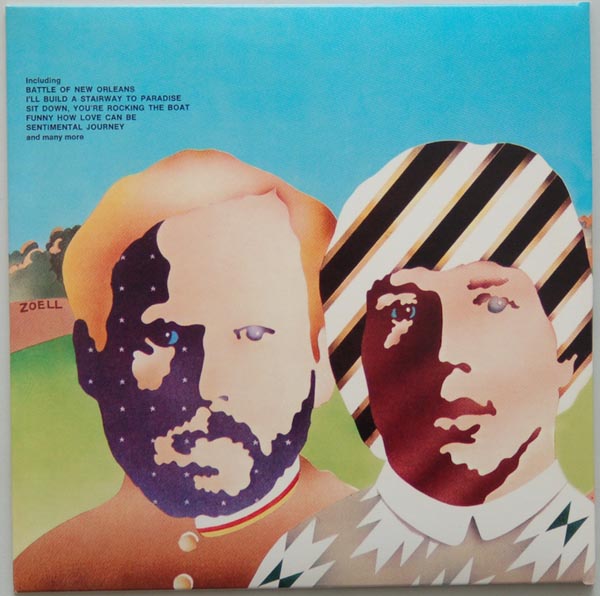
Harpers Bizarre: The Secret Life of Harper's Bizarre (1968)


The Harpers Bizarre may be of the most misunderstood and wrongfully ignored bands from the 60s. Well...they may not have been a band in the typical sense of the word to begin with. Autumn Records signed the Tikis in 66 or 67, who were then composed of Ted Templeman, Dick Scoppetone, Dick Yount, John Petersen and Eddie James. Apparently, Randy Newman was said to have been a member of the Tikis for a brief while. When Autumn Records was bought by Warner Bros. in 67, budding producer Lenny Waronker picked the Tikis to do a version of Paul Simon's 59th Street Bridge Song. Waronker's version featured an orchestral woodwind backing track and thick layers of choral harmonies sung almost entirely by Templeman and Scoppetone. One of the most breathtaking moments of 60s AM radio pop occurs when the instruments drop out at the one and a half minute mark of the song, leaving the only angelic, interweaving vocal harmonies. The band's name was changed to Harpers Bizarre and the single was released to very good commercial reception, peaking at #13 on the Billboard Hot 100. After the success of the single they recorded their debut album named after the hit single called Feelin' Groovy. The record featured songs by the likes of Van Dyke Parks and Randy Newman, as did the follow up LP issued later that year called Anything Goes, a pseudo-concept album centered around the motif of Cole Porter's classic ragtime-jazz tune of the same name. Few of Templeman and Scoppetone's fine original tunes would make the first few records and according to Scoppetone they had to fight tooth and nail with Waronker and WB to get their originals on the albums. However, the B-side to their rendition of Glen Miller's "Chattanooga Choo-Choo", which was a minor hit in late 1967, was a dazzling, horn and string laden cheery, broadway-type tune called "Hey, You in the Crowd" ,penned by Templeman, that did enjoy some chart success in a few markets across the country.

The sound the Harpers and Waronker were going for were far removed from what was considered "cool". This is not a rock 'n' roll band by any means. Drawing inspiration from the music of 1920s, particularly George Gershwin and the Tin Pan Alley sounds, they sought to meld those influences with the burgeoning sound of complex studio pop of the mid-1960s. Templeman and Scoppetone, often singing duel lead vocals on almost all of their songs, both sing in high tenor voices not unlike what some people might describe as "choir-boy" esque. As un-hip as they may have seemed in the public eye, they were surrounded by some of the most innovative and challenging talents that the LA music scene had to offer, most prominently the aforementioned Randy Newman and Van Dyke Parks. Templeman revealed in an interview in the late 1990s that Newman and Parks often played and sang on the Harper's records, but went uncredited. Harry Nilsson even wrote a song specifically for the Harpers called "Poly High" and was released as a single (that flopped, despite a fantastic vocal arrangement from the Harpers), a song that would eventually end up the soundtrack to Nilsson's made-for-TV animated special, 'The Point!' in 1971.


By 1968, the band's popularity had waned, but were still one of the bigger draws on Warner Bros. Waronker and the Harpers went on to release their third album entitled, 'The Secret Life of Harpers Bizarre', which many Harpers fans consider to be their finest album statement. Although they had already dabbled with the concept album on 'Anything Goes', 'the Secret Life...' was a full on concept album, with each song effortlessly flowing into the next (not unlike, say, Dark Side of the Moon). The concept you ask? Well, there may not have been one. The best way I can describe the feel of this record is that it's as if you're listening to the score of some dreamy, and mildly psychedelic, broadway musical that takes place in a dream. The song selection is obscure, but fantastic. It starts with a stirring rendition of "Look to the Rainbow", a song that was indeed originally from a successful broadway musical called 'Finian's Rainbow' that was first performed in 1947. The blissful opening passage of the album quickly takes a sharp detour into much different territory as the Harpers do a fine version of the country classic 'the Battle of New Orleans' made famous by Johnny Horton in 1959. Banjo and gunfire sound effects are used to great affect as it captures a feeling of early Americana. The next song, 'When I Was a Cowboy' is in a similar vein, but instead of the chaos of the war of 1812, we find the Harpers gently drifting across the western plains. The song is anchored by a rustic and delta-bluesy guitar riff, propelled by fantastic brush work on the drums, a baritone sax, and the Harpers typical soft, angelic vocal harmonies. What follows is an album highlight, a delicately soft and dream like version of the Doris Day standard 'Sentimental Journey'. The song's sparkling guitars and gorgeous harmonies float alongside the quiet lead vocal and subtle organ track. Just beautiful. It next segues into a Templeman-Scoppetone original, 'Las Mananitas'. A very nice tune that fits perfectly along side of the rest of the album's more standard oriented material. A short, peaceful song with marimba, accordian and mandolin and another great duel lead vocal from Dick and Ted. Another highlight. The first side of the record closes with a Newman composition, "Vine Street", that showed up as the lead off track on VDP's debut album 'Song Cycle' and "Me, Japanese Boy", a Burt Bacharach song, done much better here by the Harpers than by Bobby Goldsboro, who had first done this Bacharach tune in 1964. The record is spliced together with "interludes" which are mostly brief and heavily reverberated samples of earlier Harper's tunes, giving a feeling of the band faintly remembering the past as they roll through uncharted territory.


The second side begins with the Gershwin tune 'I'll Build a Stairway to Paradise', which features a terrific orchestral arrangement from producer Lenny Waronker and again, great, soft vocals from the band. Another great original tune from Dick and Ted follows called 'Green Apple Tree', very similar in mood to 'Las Mananitas'. The next song, 'Sit Down You're Rocking the Boat', a number from the Guys and Dolls musical may be the one weak link on the record. It's a nice arrangement but the gospel singers featured on the song dont contrast well with the vocals from the Harpers. But after another interlude, the album begins it's magnificent closing stretch with another home-spun song that captures that early Americana feeling, 'I Love You, Mama'. The song was written and arranged for the band by former Beau Brummel member Ron Elliot. Two tracks later, 'Mad', another standout of the album is a peppy little horn driven number written by Dick and Ted, once again proving that their originals were just as strong as the standards and classics they were covering.

Perhaps the albums finest moments come just one track later, as a reprise of 'Look to the Rainbow' segues into the albums majestic closing number, 'The Drifter', written by the brilliant Roger Nichols. The song is about the most appropriate finale to an album that has taken us all across the country, in different eras and regions from the Louisiana Bayou, the Midwestern Plains, sunny California and the Broadway stages of New York. 'The Drifter' lyrically is about the inner desire to keep on moving, despite his intentions to settle down. Lenny Waronker pulls out all the stops with the arrangement on this one, with fantastic brass and woodwind interplay that complements the ethereal harmonies of Templeman and Scoppetone. A perfect finish to a nearly perfect album.

The Harpers would go on to release one more album, 'Harpers Bizarre 4' (another very good record, with the most input from band members thus far) and then split up until a brief reunion in the mid seventies. Templeman claims he didn't enjoy the recording sessions of 'the Secret Life' as much as he did their other albums, but they were in good hands with their producer Lenny Waronker, who crafted much of the album's flow himself. To me, this is the Harper's finest album statement, which has been sadly forgotten by all but the truest sunshine and baroque pop enthusiasts. It's a must listen.

-Casey (twitter.com/thewayKPSU)